
Nicholas Zahansky
Septembr 29, 2023
In a previous post I covered how to configure a RAID mirror on an Orange Pi Zero 3. In this guide I used the Orange Pi Zero 3 to demonstrate how to set up a RAID Mirror. However, since the post it has been brought to my attention that this is generally considered a bad idea. In light of this information,
I would like to make sure that everyone is aware of the potential risks associated with a setup like I mentioned in that post and offer a better solution for those with a bigger budget.
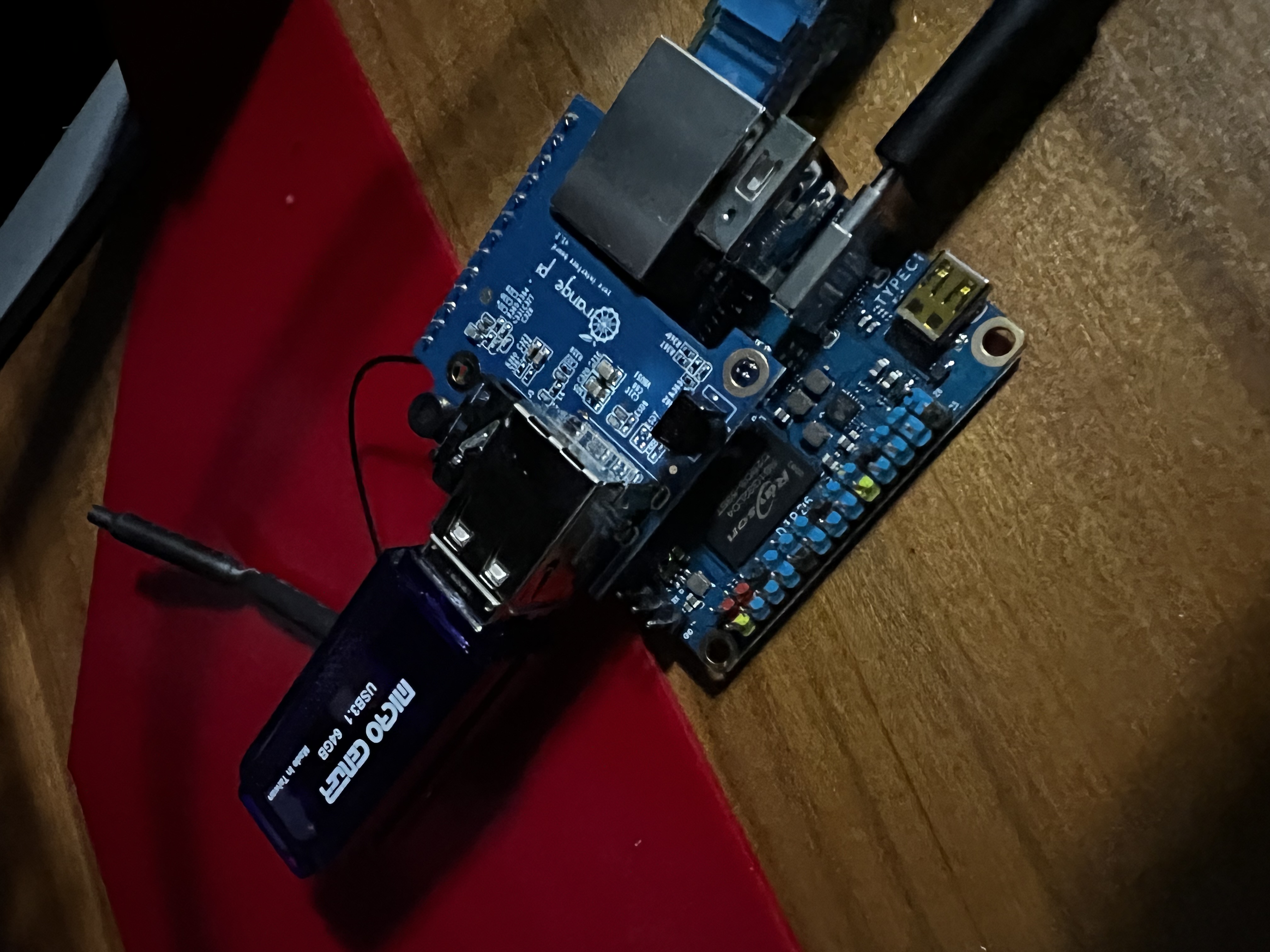
In the previous post I mention how Open Media Vault (OMV) discourages us from using USB in our RAID. In fact, the devices will not even show up OMV which is part of the reason I created the writeup in the first place.
One of the reasons it is frowned upon to use USB as RAID is its unreliability. I can think of a number of occasions where USB, on a normal computer, has randomly disconnected for seemingly no apparent reason. While normally this would be a minor inconvenience, for this can be an issue for a RAID mirror causing it to become out of sync.
Another issue is that USB drives are not designed for heavy use that generates a lot of heat and could result in premature failure of the drive. Albeit, SATA drives over USB would mitigate that issue and the USB drives I used were pretty much just for experimentation since it was what I had on hand. The final issue has to do with the limitations of the Zero 3 board itself being limited to USB 2.0 speeds which,
in my initial testing took 64GB drives over 90 minutes to perform its initial sync and another 45 minutes to rebuild when I pulled out a drive and replaced it with a new one.
While I will be switching out the USB drives for something more reliable like some SATA drives, this system is still a viable solution for my purpose, despite its potential risks.
One of the reasons being that this system is only a single component of my overall backup solution for a self hosted code repository and there will be other backups.
Furthermore, I don’t have many coding projects so, the system will only be written to occasionally and from one user which reduces the overall exposure.
Lastly, the system for me is all about learning what can and can not be done and figuring out for myself if something is a viable solution.
That being said, not everyone's needs are the same as my own and others may not be willing to take on the same risk in the name of testing and experimentation.
For just a small amount more investment you can build a similar system that avoids any of the pitfalls mentioned here. Something like the Orange Pi 5 would be better since it has pcie to take advantage of.
We can utilize a simple nvme to SATA adapter to attach our drives which should be much more reliable than over USB.
The Raspberry Pi 5 would be another good option. However, the Orange Pi 5 Plus while slightly more expensive than the base Orange Pi 5 might be a better option since is supports PCIe 3.0 x4 lanes vs the PCIe 2.0 x 1 lanes on the base model.